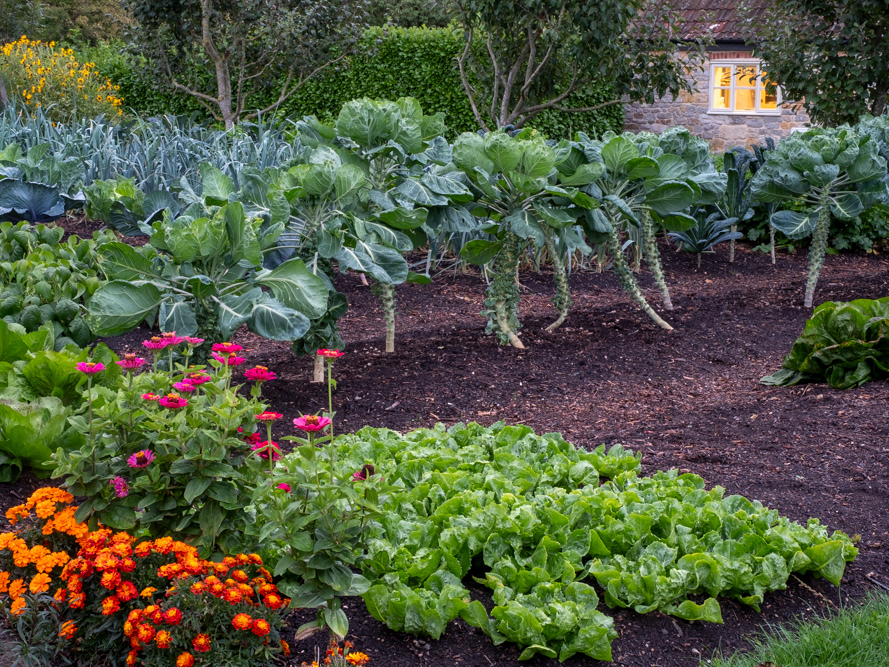
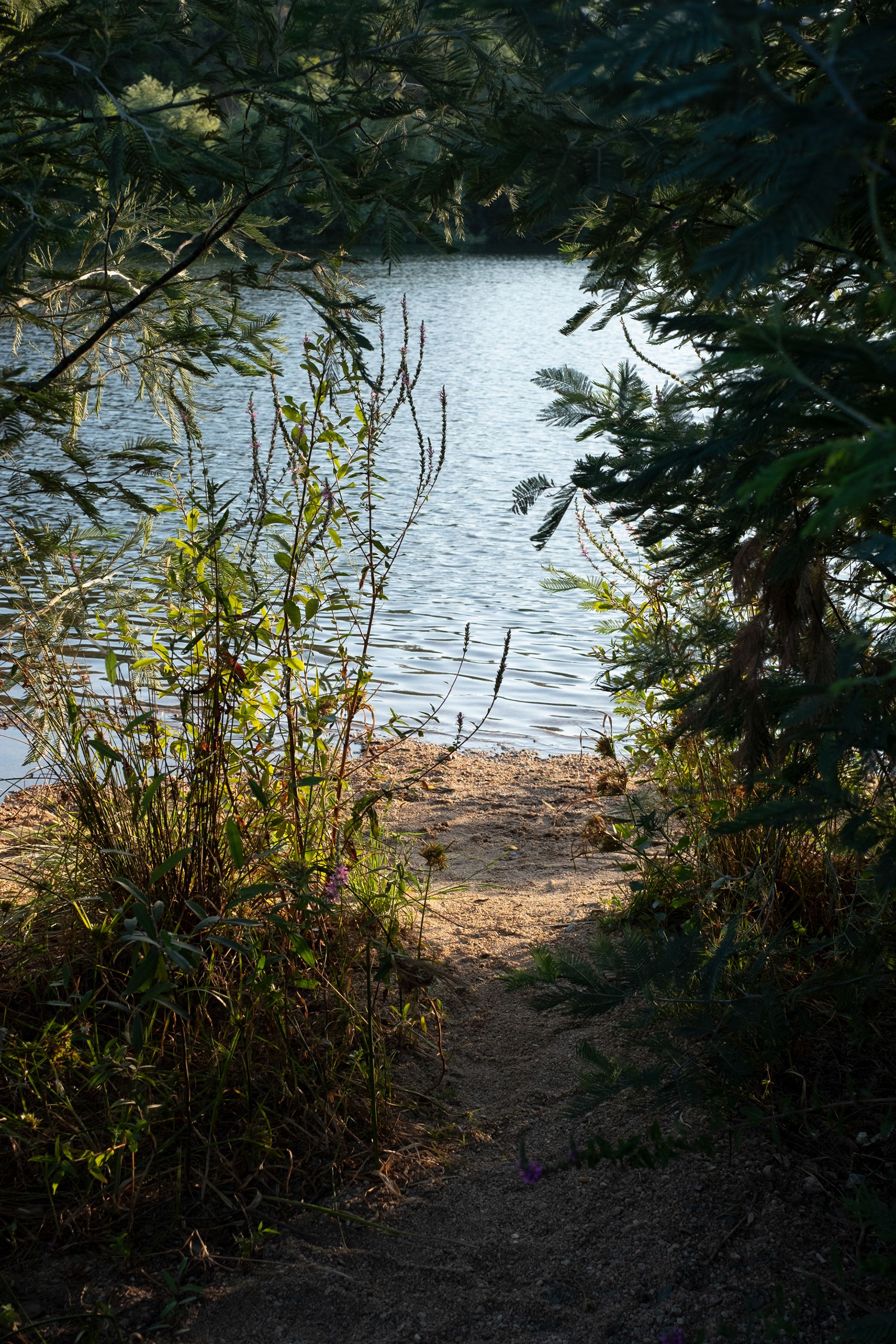
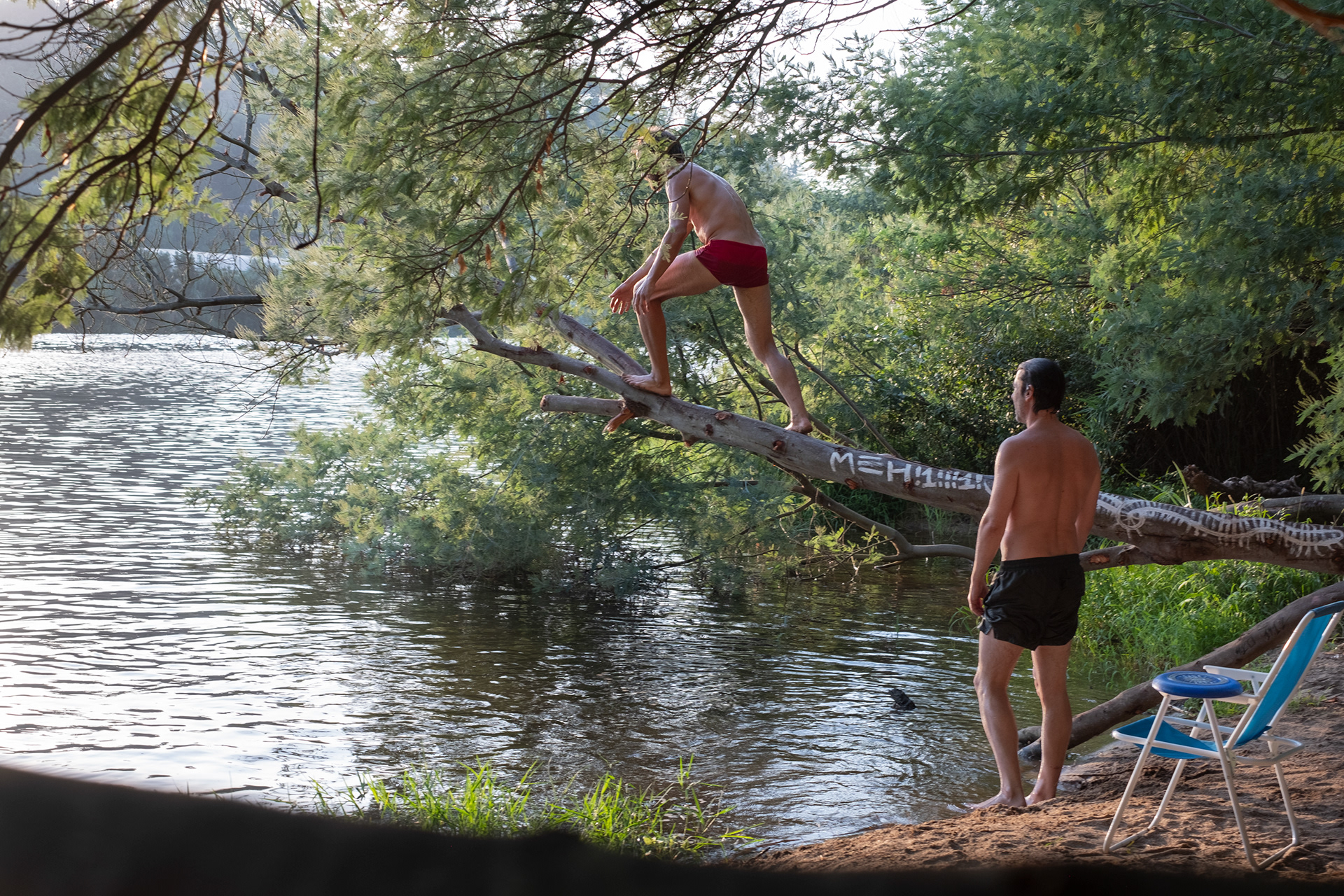
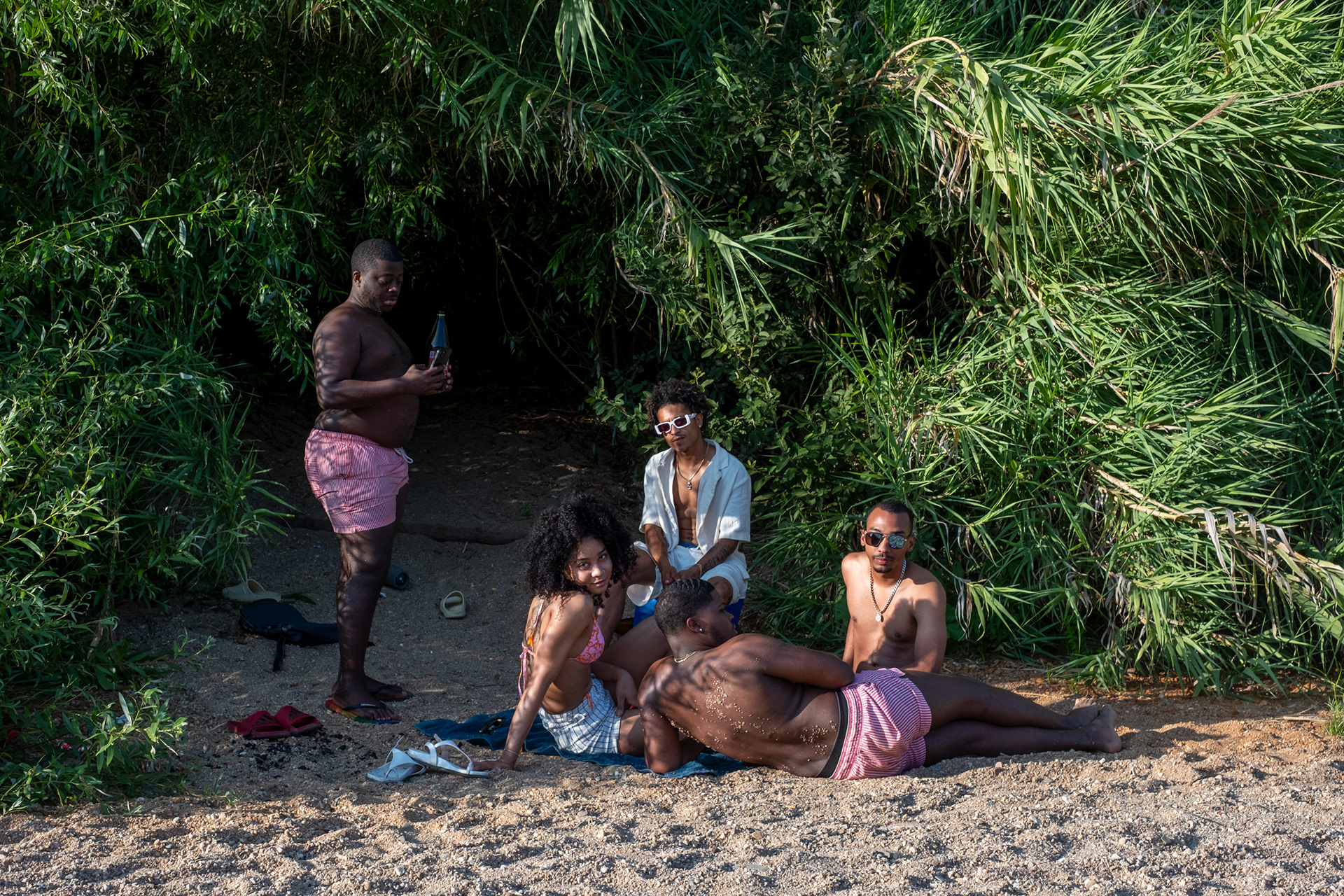
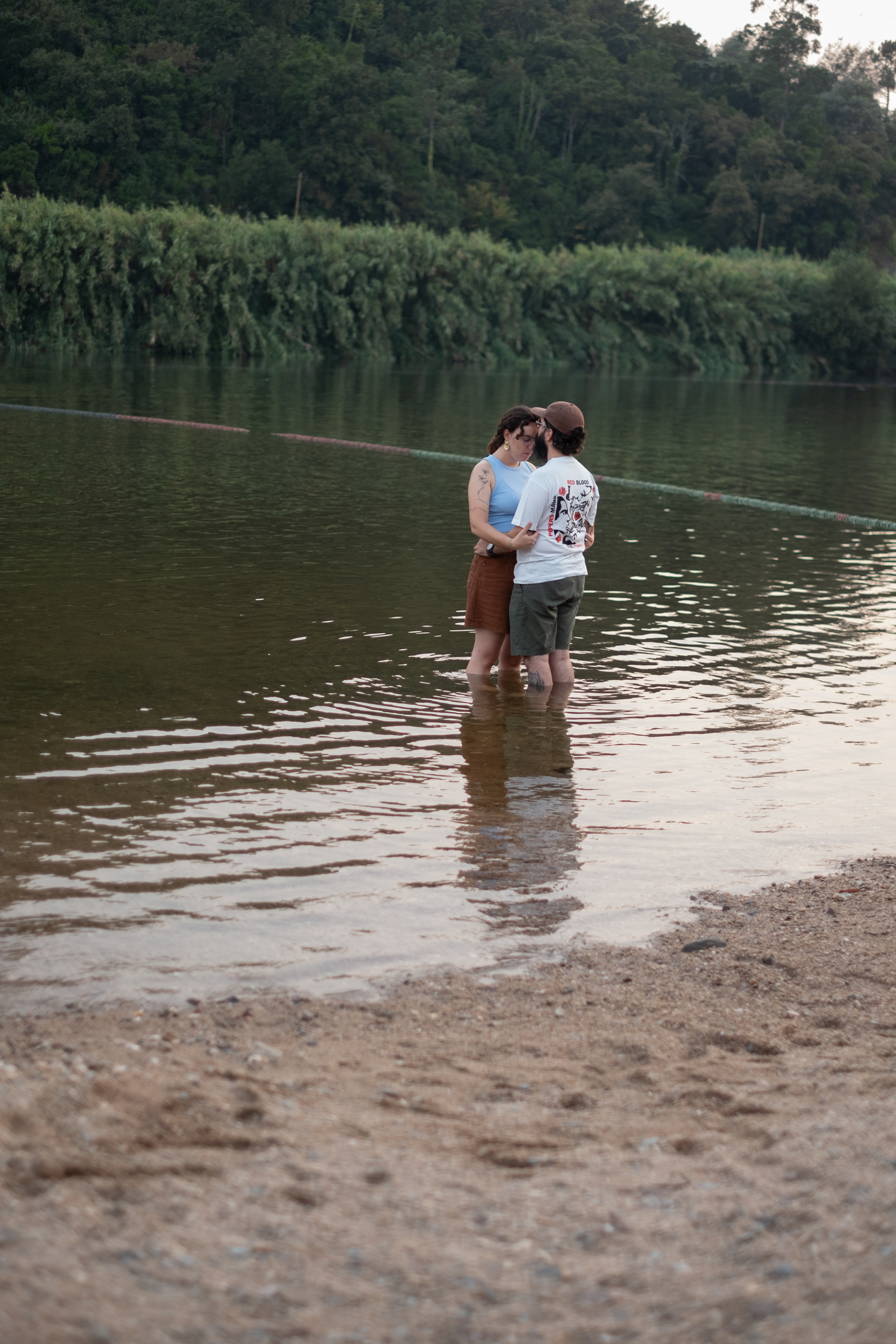
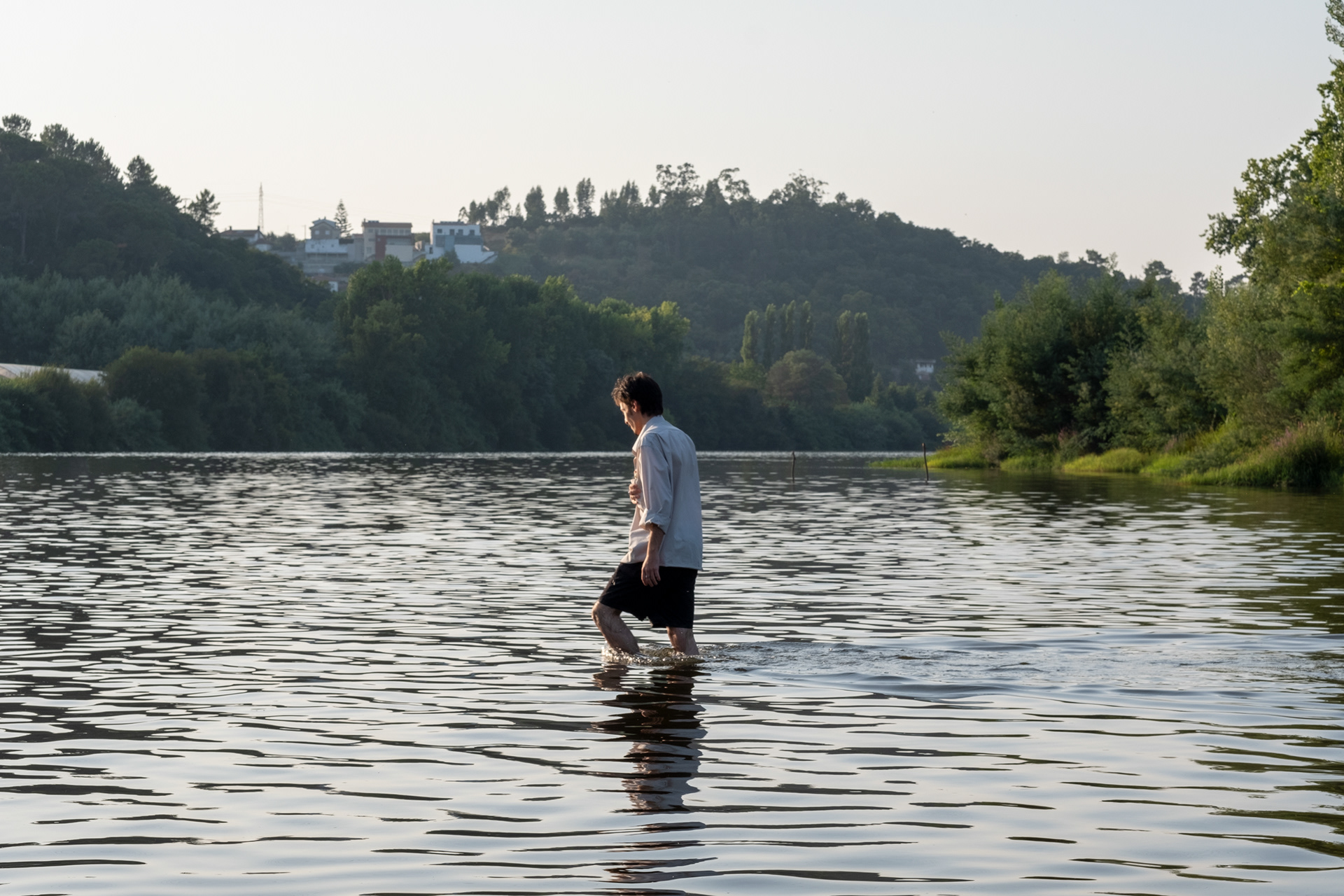
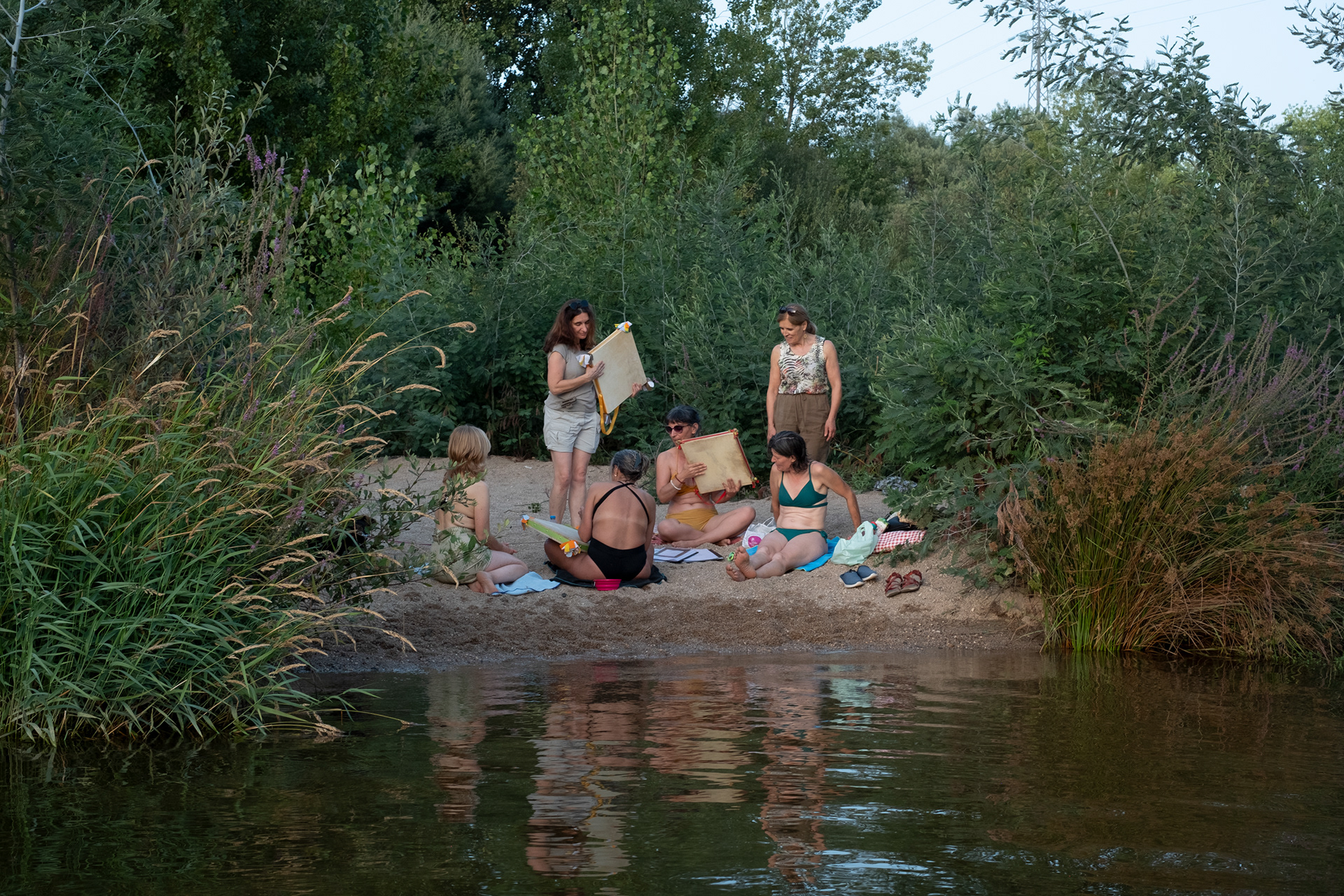
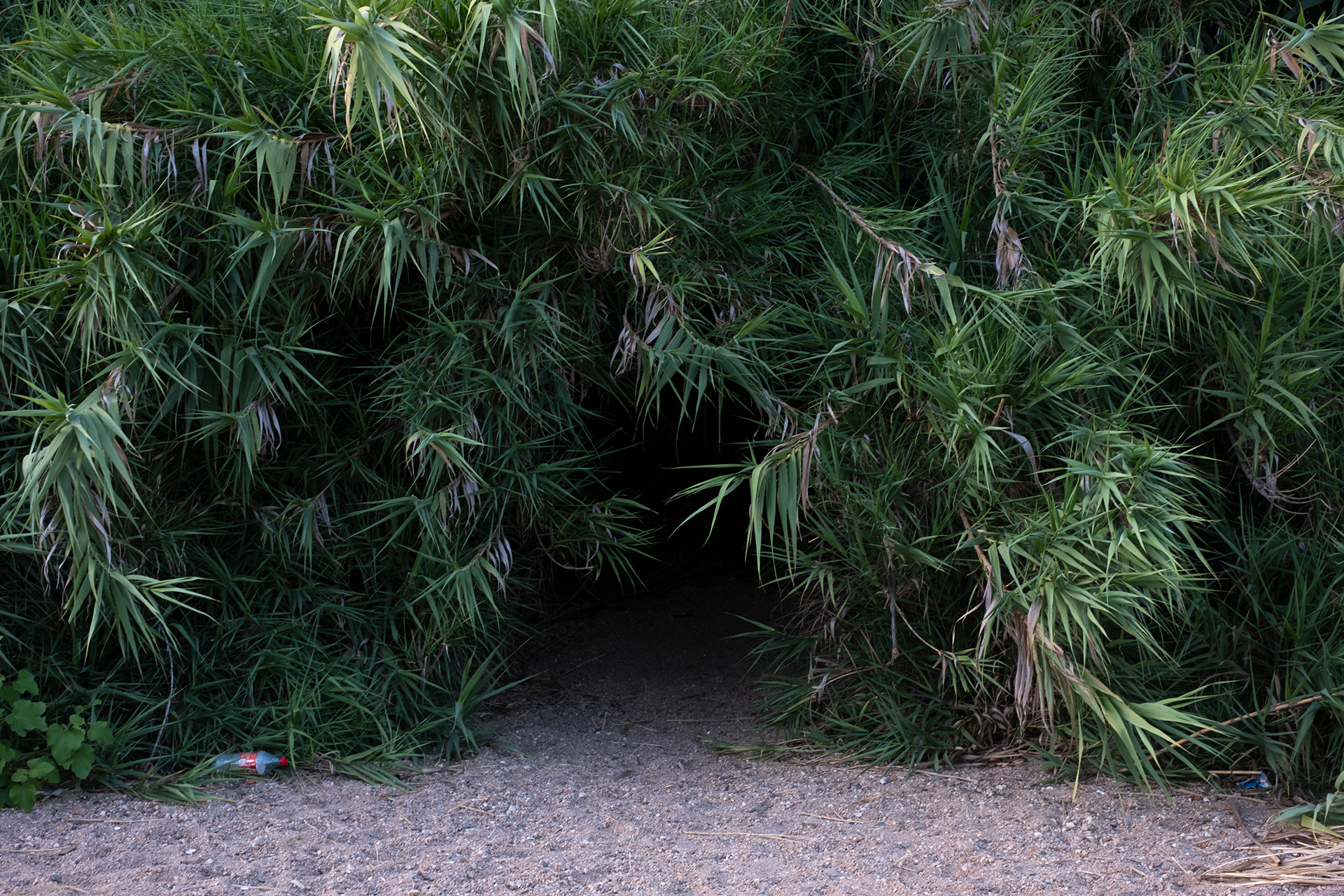
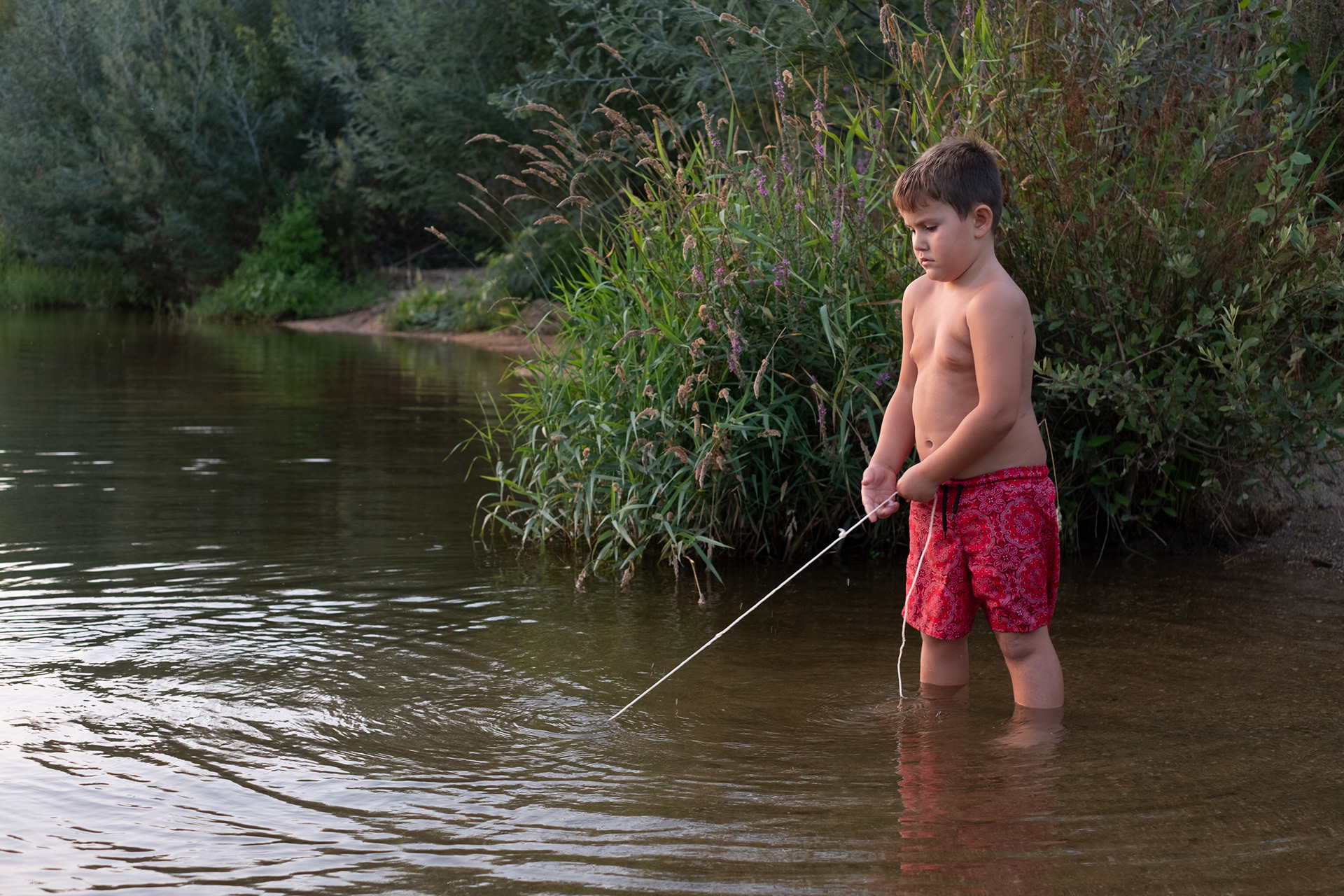
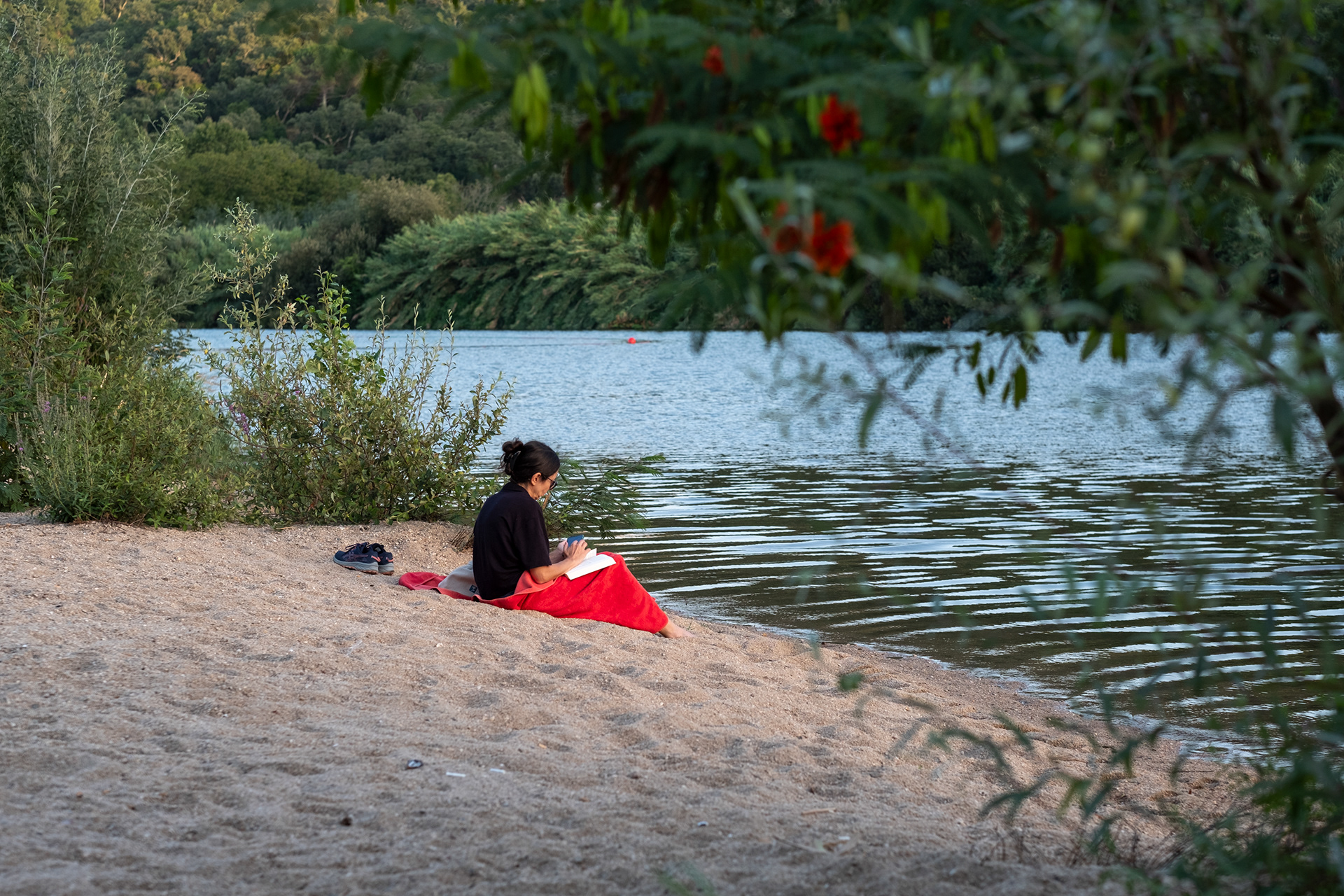
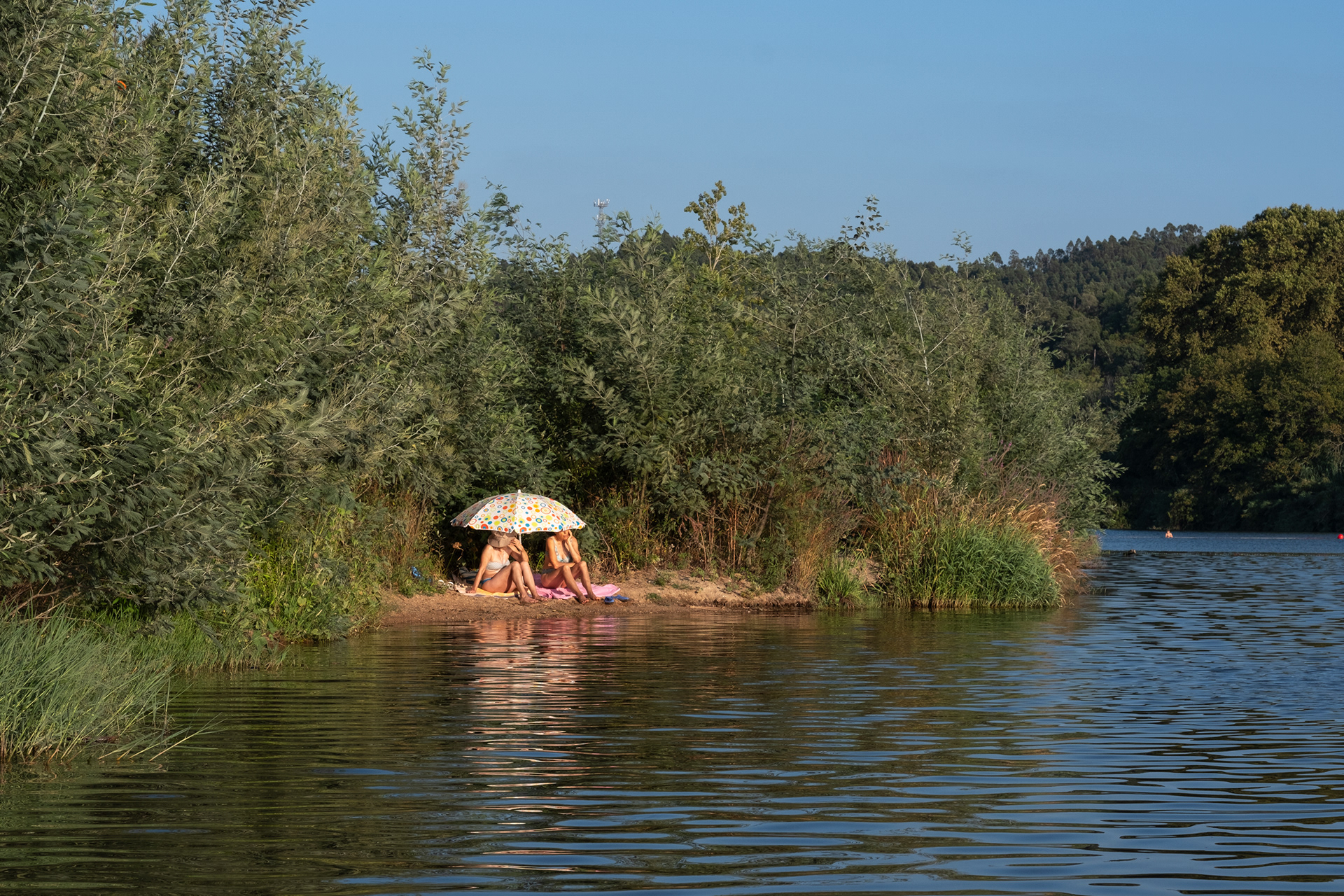
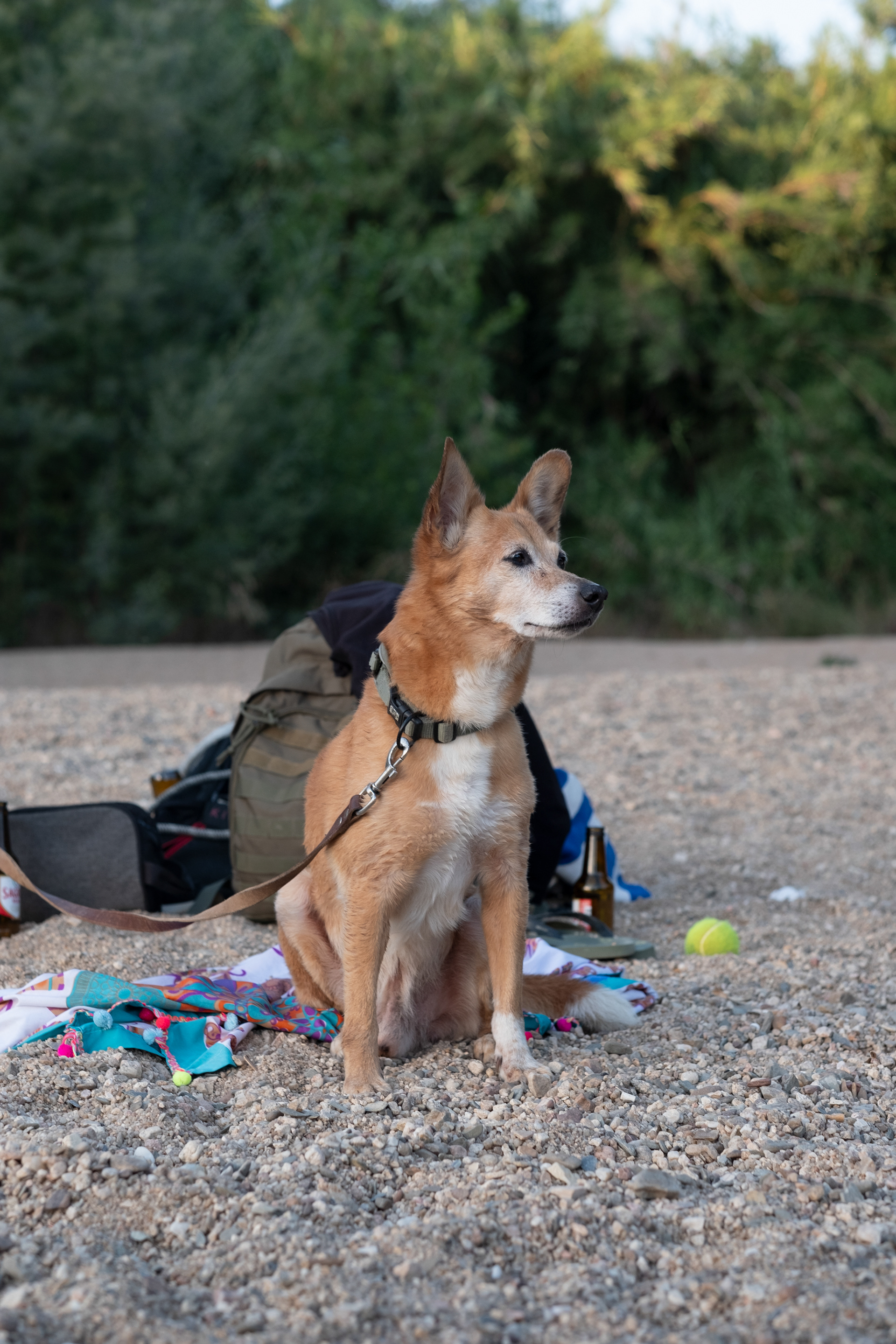
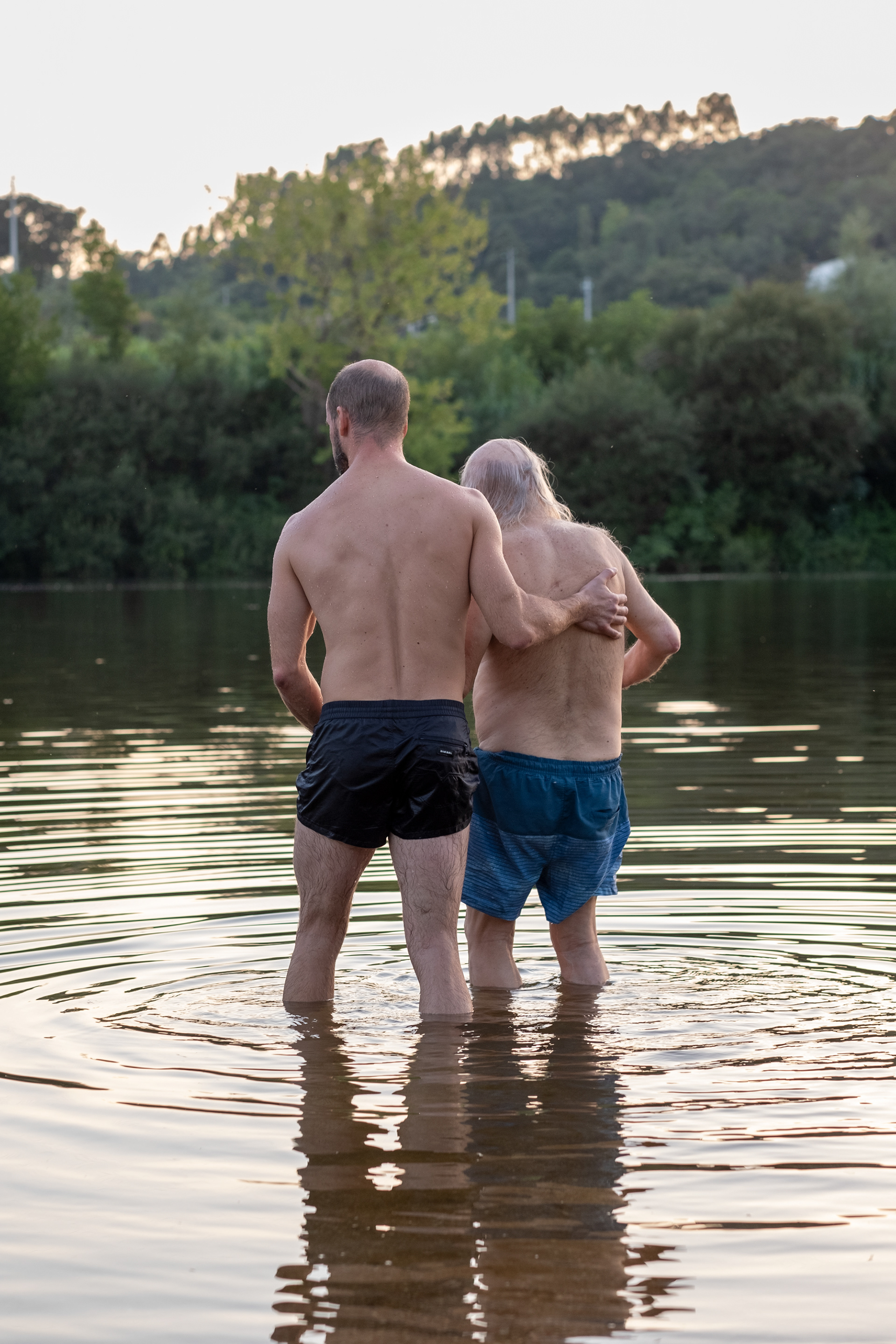
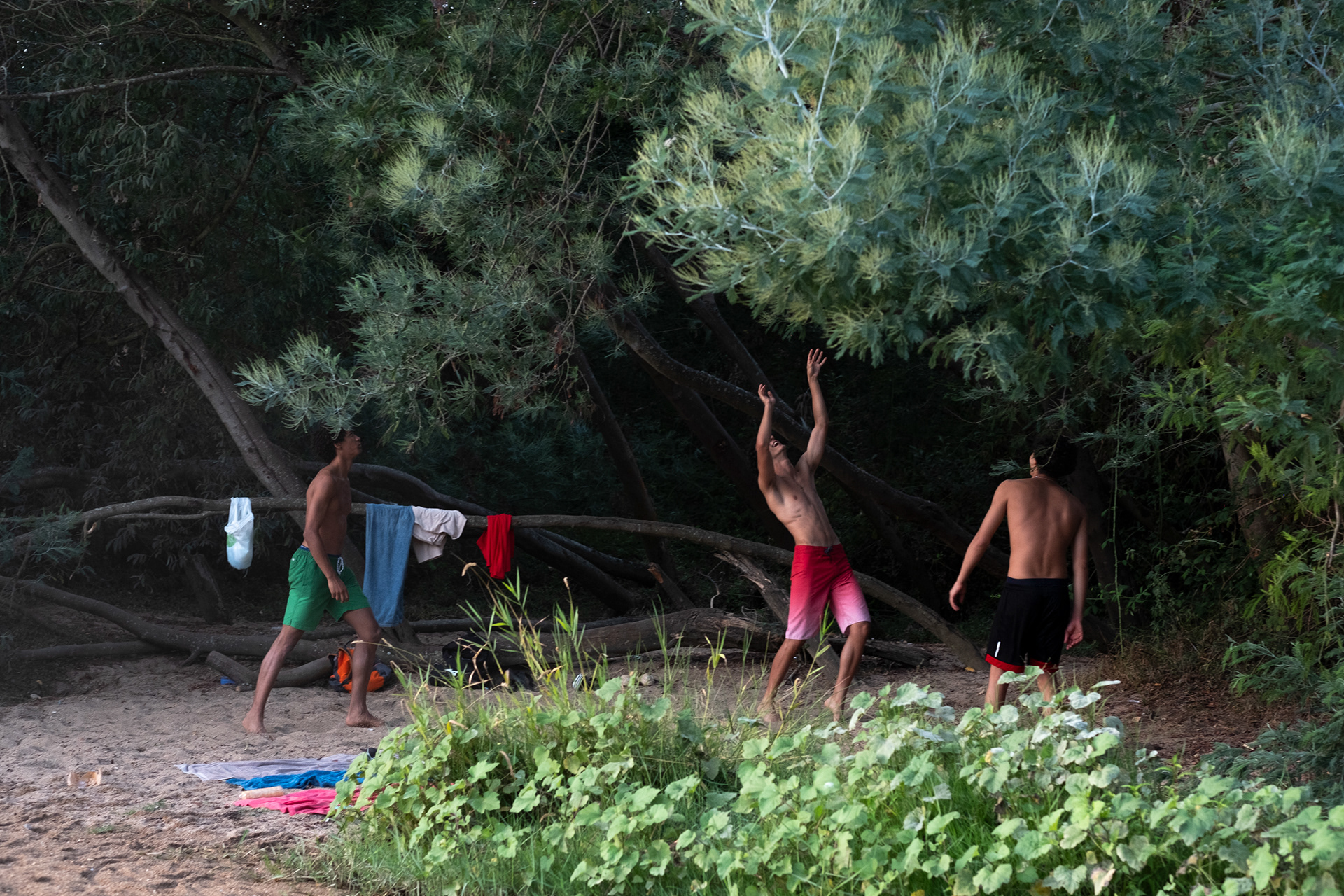
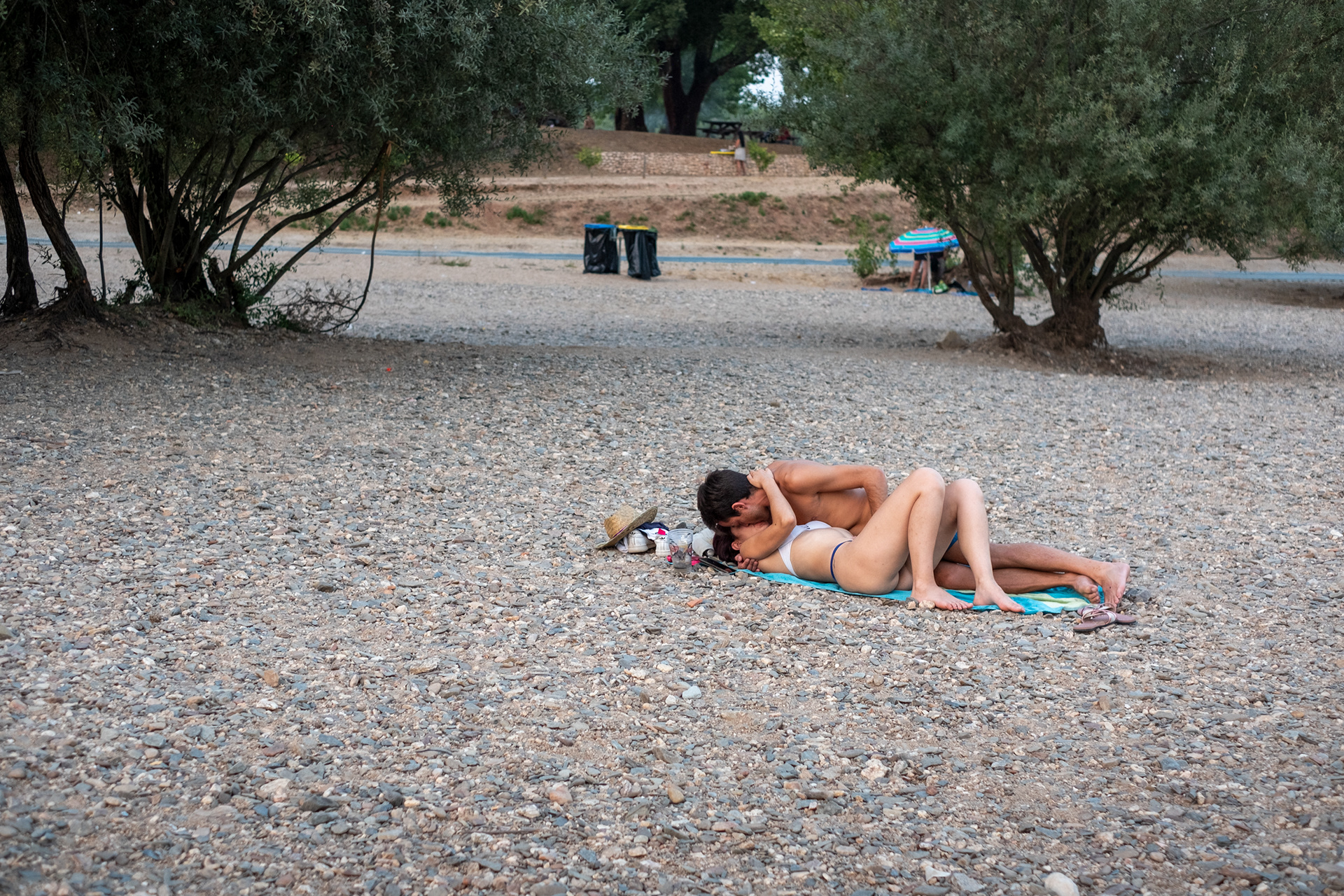
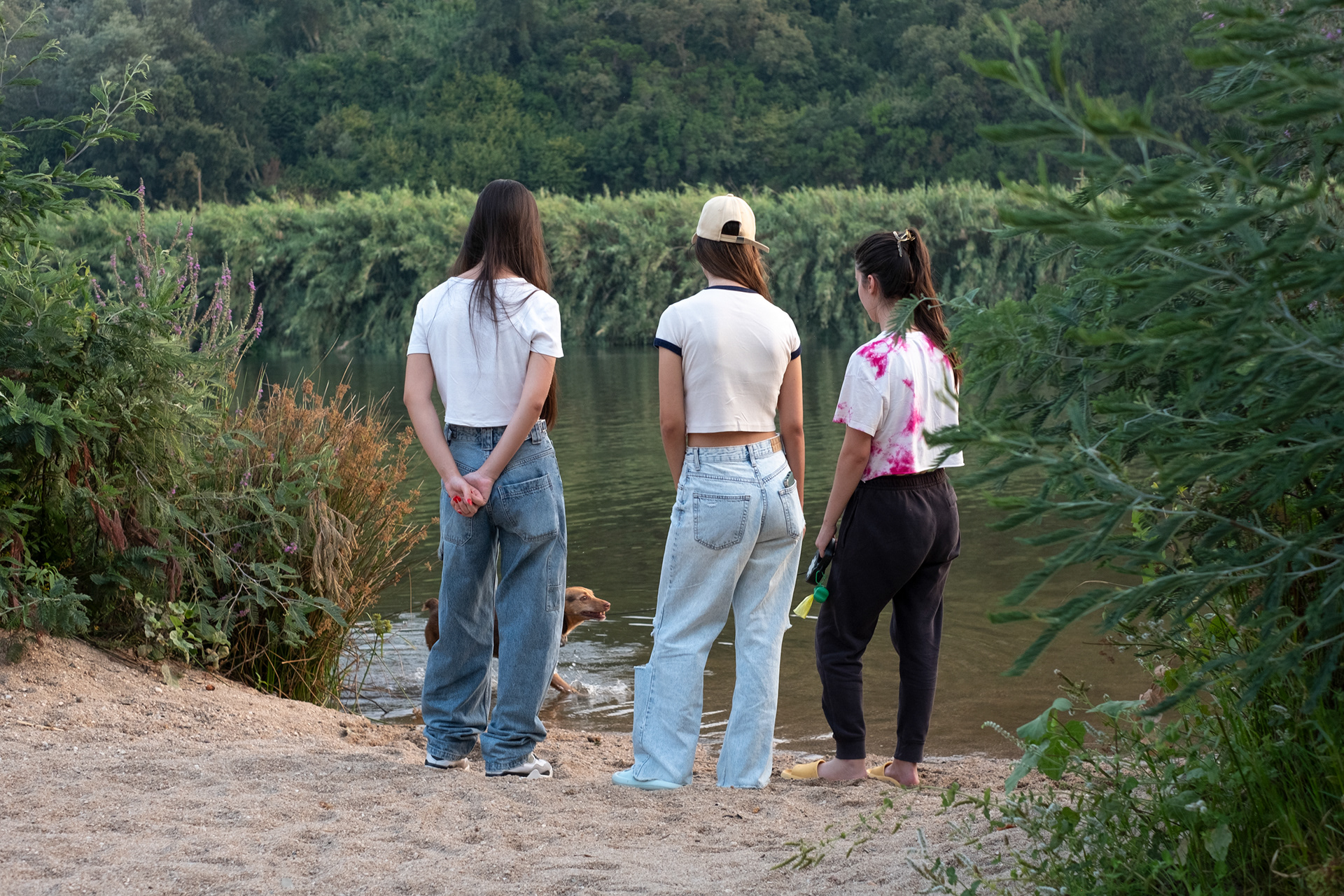
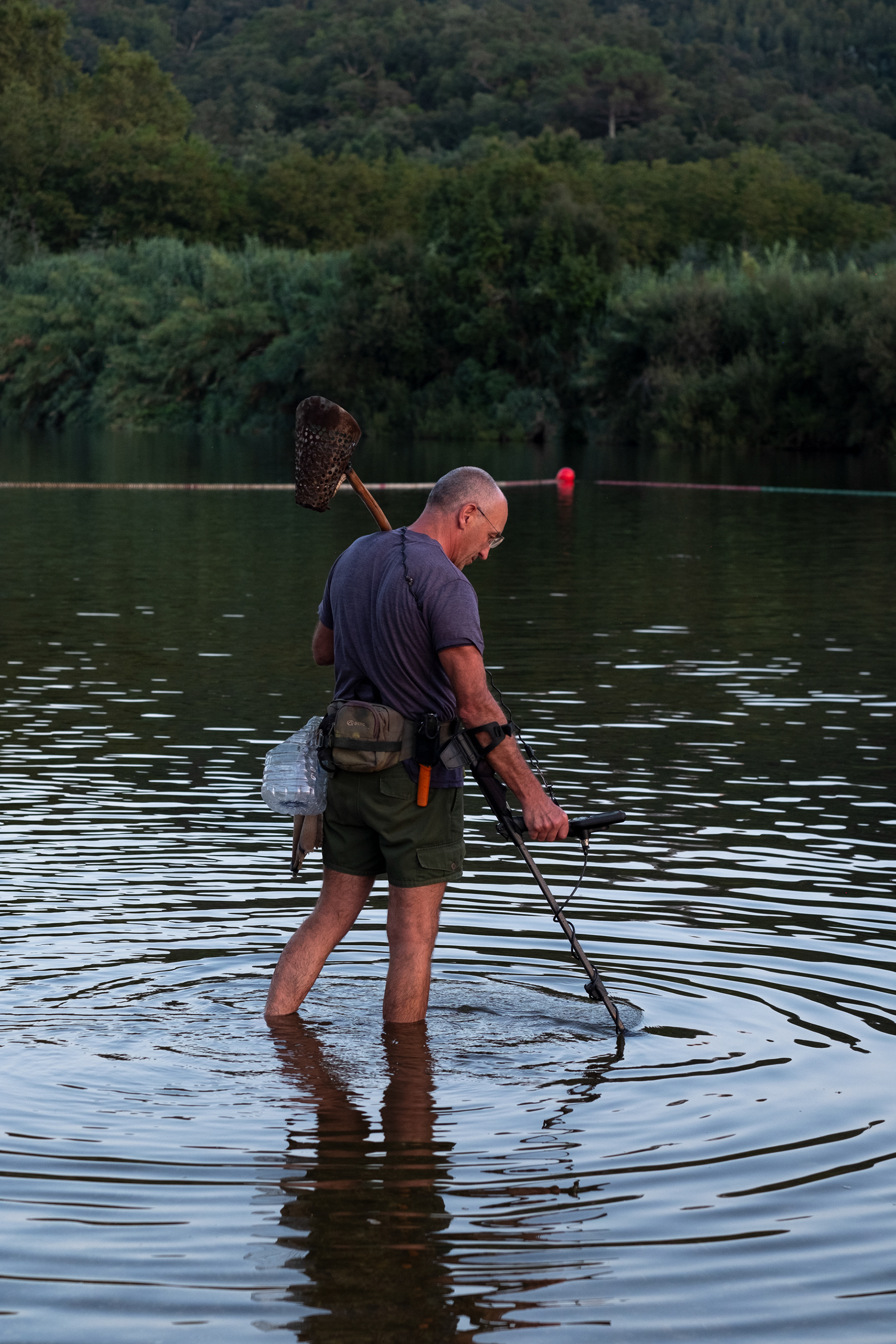
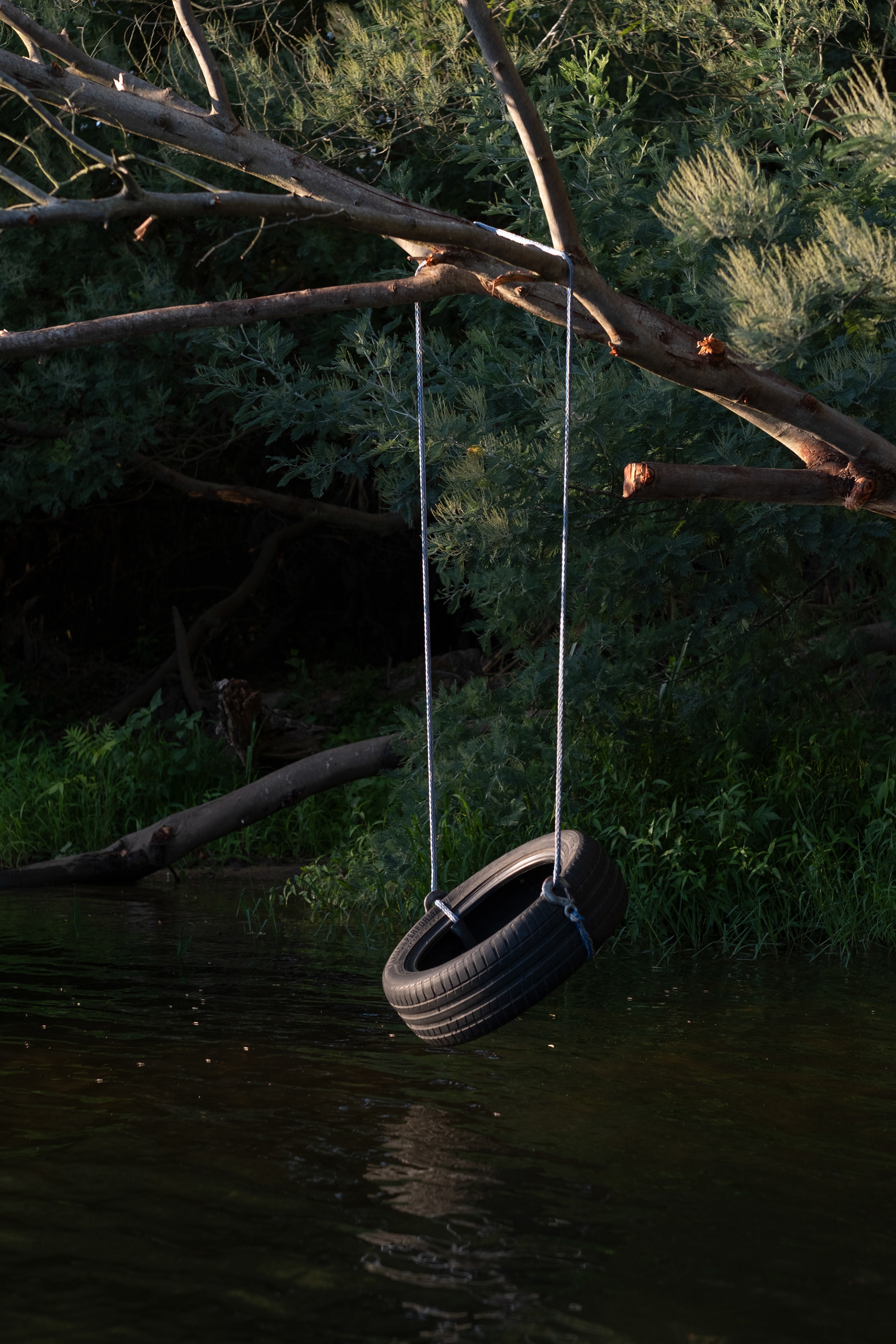
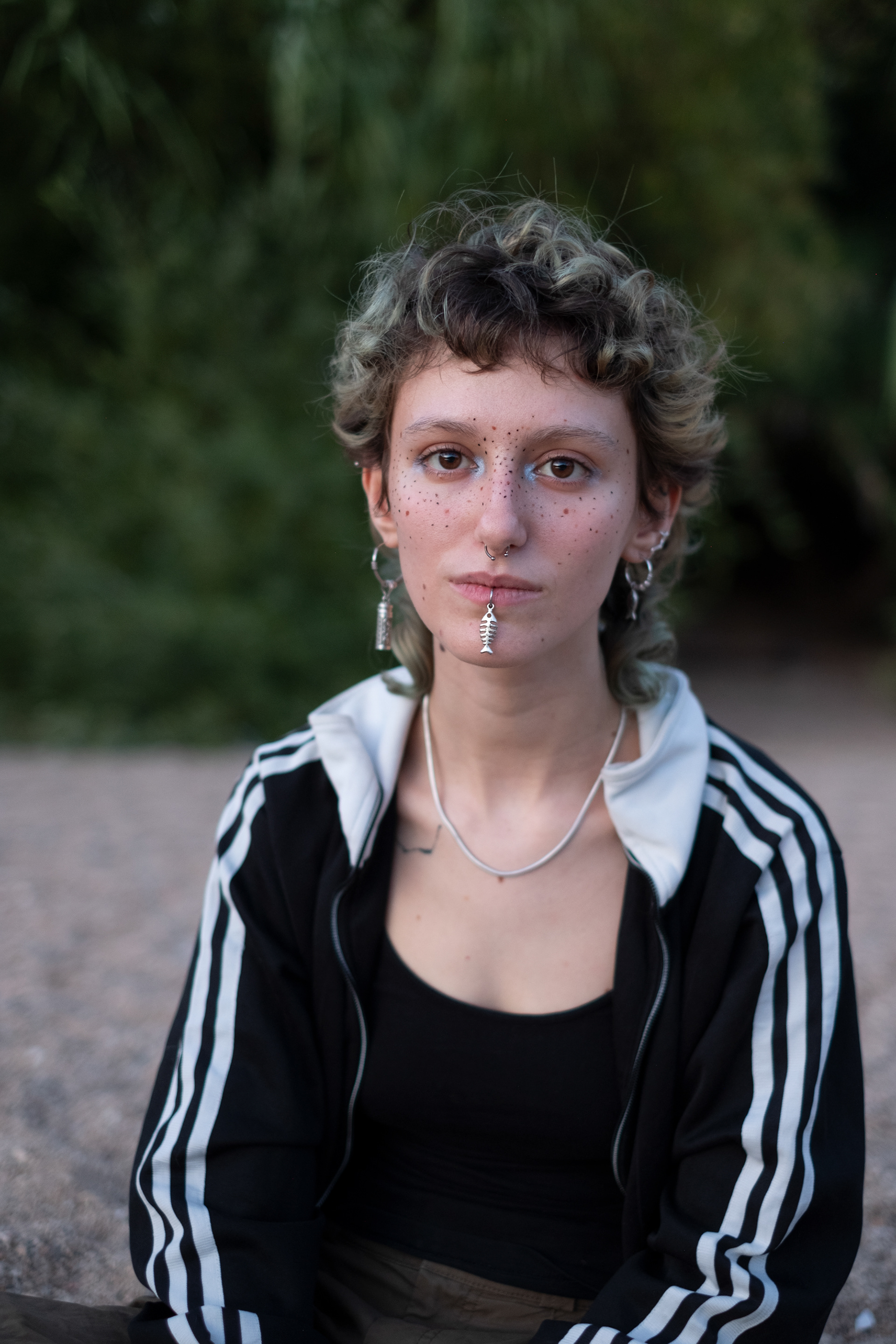
Rebolim, a beach on the Mondego River in the center of Coimbra, Portugal, establishes itself as a territory of coexistence between nature, body, and community. Over time, the space has been appropriated through multiple practices—contemplation, leisure, sport, artistic creation, and social gathering—that coexist spontaneously and dynamically.
Amidst games, swimming, fishing, and moments of individual and collective expression, a plural human ecosystem emerges, marked by the presence of different generations, origins, and ways of life. In constant dialogue with the river and the surrounding landscape, this territory reveals itself as a living space, shaped simultaneously by nature and the ephemeral interventions of its visitors. The project seeks to observe the relationships of belonging, identity, and community that are built in this meeting place.
Ongoing since August 2025.
Scroll down to read a critical essay by Professor Isabel Calado.
Ways of Seeing
Inspired by John Berger, this section brings together writings by other authors.
Professor Isabel Calado wrote about her own way of seeing the image below. Scroll down to read the text.
GIVING VOICE TO A STILL SCENE by Prof. Isabel Calado
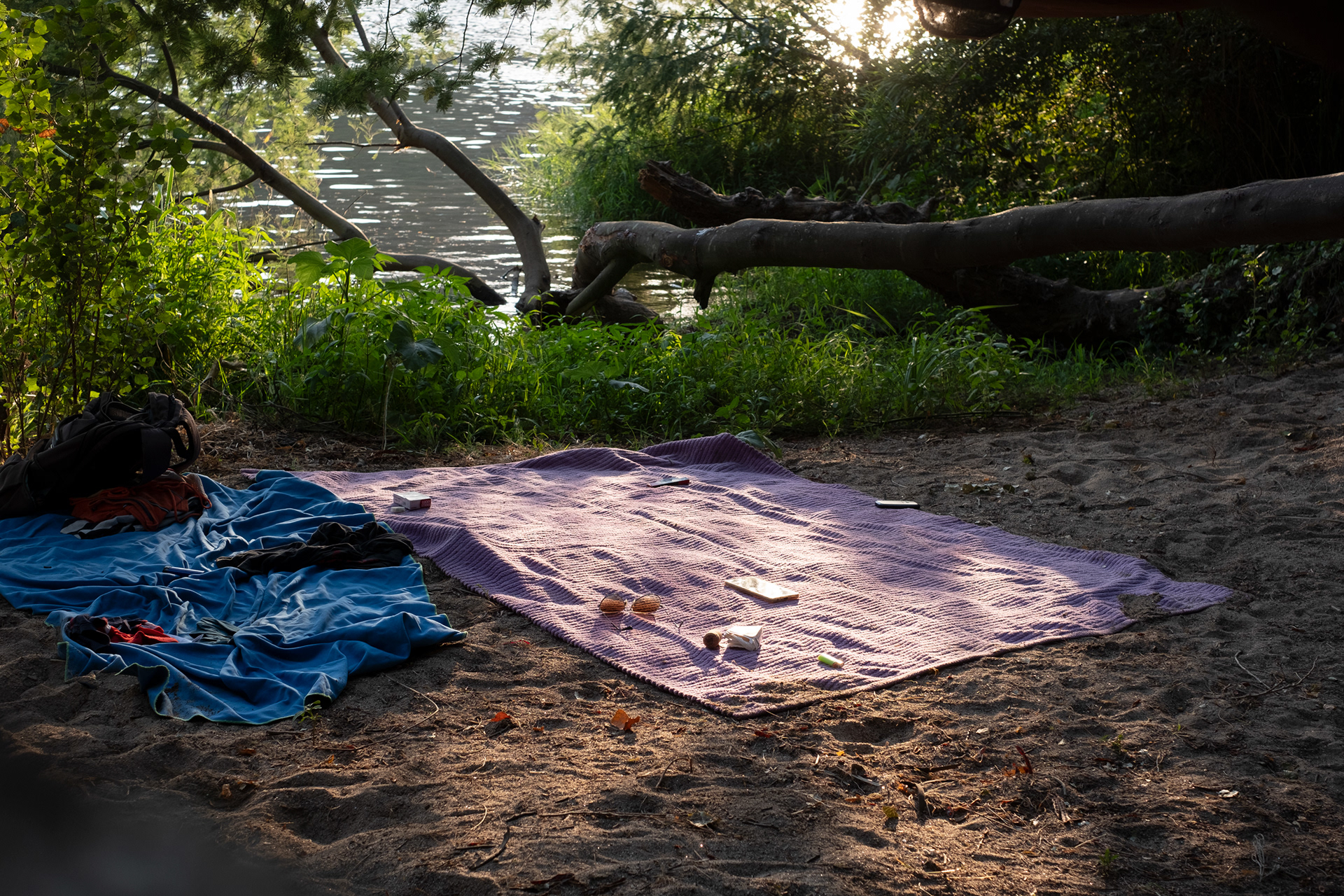
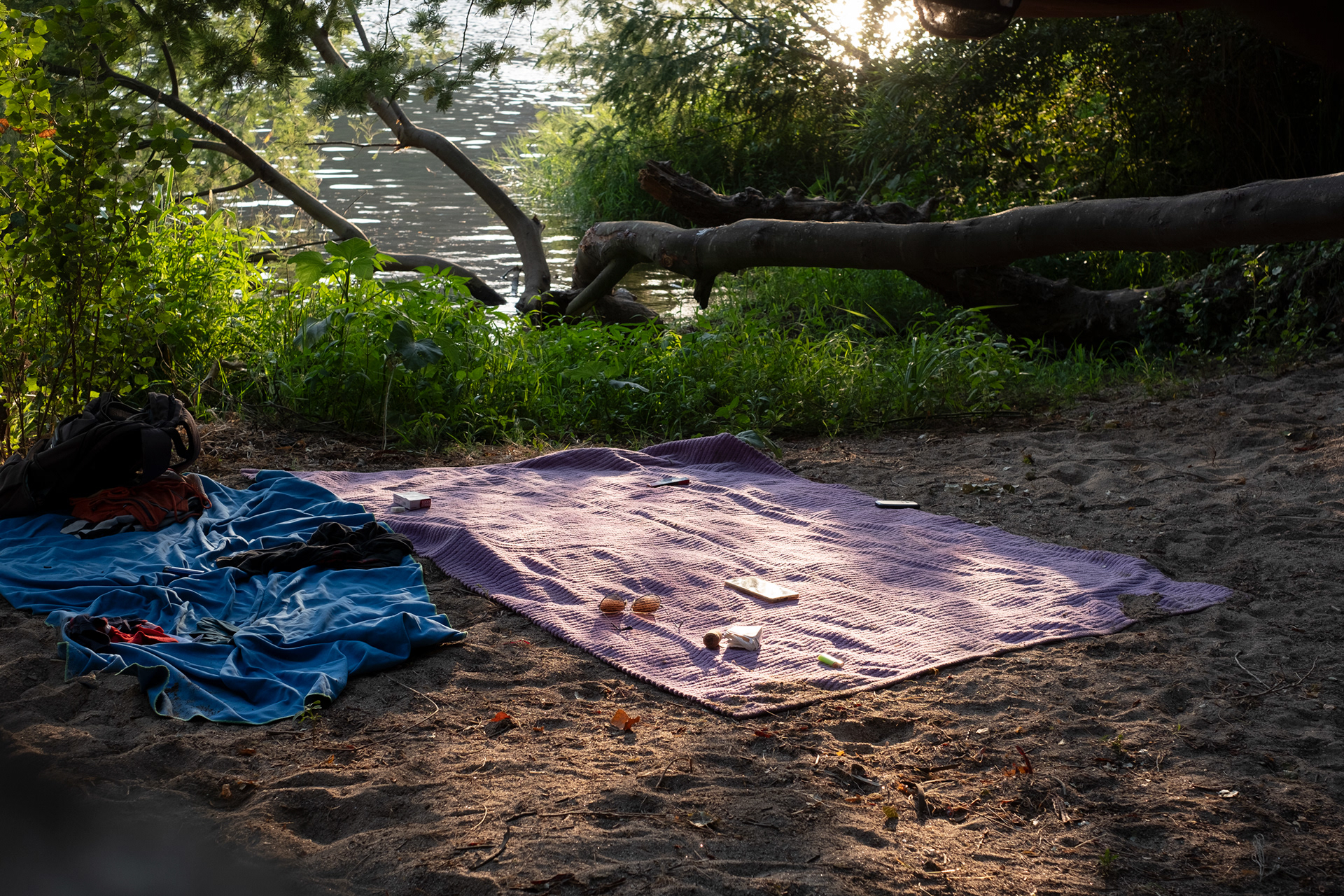
There is a rectangle at the centre of the photograph. Resting within it is a pair of sunglasses whose lenses resemble two scraps of vegetation, dried by the sun and rendered translucent by the light. It is also the light, through its reflective power, that turns the lighter into a small lantern and does the same with the mobile phone screens. The two packs of Lucky Strike help identify the absent figures, whom the imagination begins to construct, even managing to glimpse a stretch of sea where there is in fact only a crumpled blue towel. Or perhaps it is the thought of the river expressing itself in this way, yearning for its estuary. The sandy earth, with its beautiful brown hue and rich tactile quality, stains the edge of the pink towel and layers texture upon texture. A green frame separates figure from background, showing the river swallowing a tree.
A still scene, yet not a mute one, as any trace prompts more questions than answers: where did the couple who had taken shelter there go? Did they abandon the shelter where their cell phones were far apart, to finally be alone and close? Are they a woman and a man, judging by the colours of the towels purchased in the marketplace of banalities?
What interests me in this photograph is the way the late light transforms volumes into characters, raising the triviality of objects and place to the status of a stage upon which we can observe states of mind and interactions, desires for permanence and escape, an atmosphere of tranquillity and its negation by electronic devices, which keep their owners in a state of permanent mobilisation, hostile to stillness and presence, under the name of entertainment.
What would become of this reality without the focus that illuminates it, both technically and mystically, and with which the photographer Sofia Pratas Morais has written the scene?
Portuguese (original version)
Há um retângulo no centro da fotografia. Nele estão pousados uns óculos de sol cujas lentes se assemelham aos dois farrapos vegetais que o sol secou e que sob o efeito da luz parecem translúcidos. É também ela, com o seu poder de reflexão, que transforma o isqueiro numa pequena lanterna e faz o mesmo com o display dos telemóveis. Os dois maços de Lucky Strike contribuem para a identificação dos ausentes, que a imaginação constrói, chegando mesmo a ver um pedaço de mar onde apenas existe uma toalha azul amarrotada. Ou talvez seja o pensamento do rio que assim se expressa, desejando a foz. A terra arenosa, com uma bela cor castanha e toda a sua qualidade tátil, tinge a borda da toalha rosa e agrega textura a textura. Uma moldura verde separa a figura e o fundo, que mostra o rio a engolir uma árvore.
Uma cena parada, mas não muda, como é próprio de qualquer vestígio, suscita mais perguntas que respostas: para onde foram os dois que ali se tinham abrigado? Abandonaram os telemóveis, cada um para seu lado, para enfim estarem a sós? São uma mulher e um homem, a avaliar pela cor das toalhas compradas no mercado das banalidades?
O que me interessa nesta fotografia é o modo como a luz tardia transforma os volumes em personagens, elevando a trivialidade dos objetos e do lugar à condição de um palco, onde podemos observar estados de espírito e interações, desejos de permanência e de evasão, uma atmosfera de tranquilidade e a sua negação operada pelos dispositivos eletrónicos, que mantêm as criaturas num estado de mobilização permanente, inimigo do sossego e da presença, a que chamamos entretenimento.
Que seria desta realidade sem o foco que a ilumina, técnica e misticamente, e com que a fotógrafa Sofia Pratas Morais escreveu a cena?